My parent died without a will. What happens to the house?
When a parent dies without a will in Malaysia, the house doesn't get frozen or seized — but nothing can move until someone is legally appointed. Here's what actually happens, and what to do first.
Estates · Chrysandy Lai
This article covers non-Muslim estates in Malaysia. If the person who died was Muslim, their estate is distributed under Faraid through the Syariah Court — that’s not covered here, and it isn’t something this firm handles; see the note further down for where to go instead.
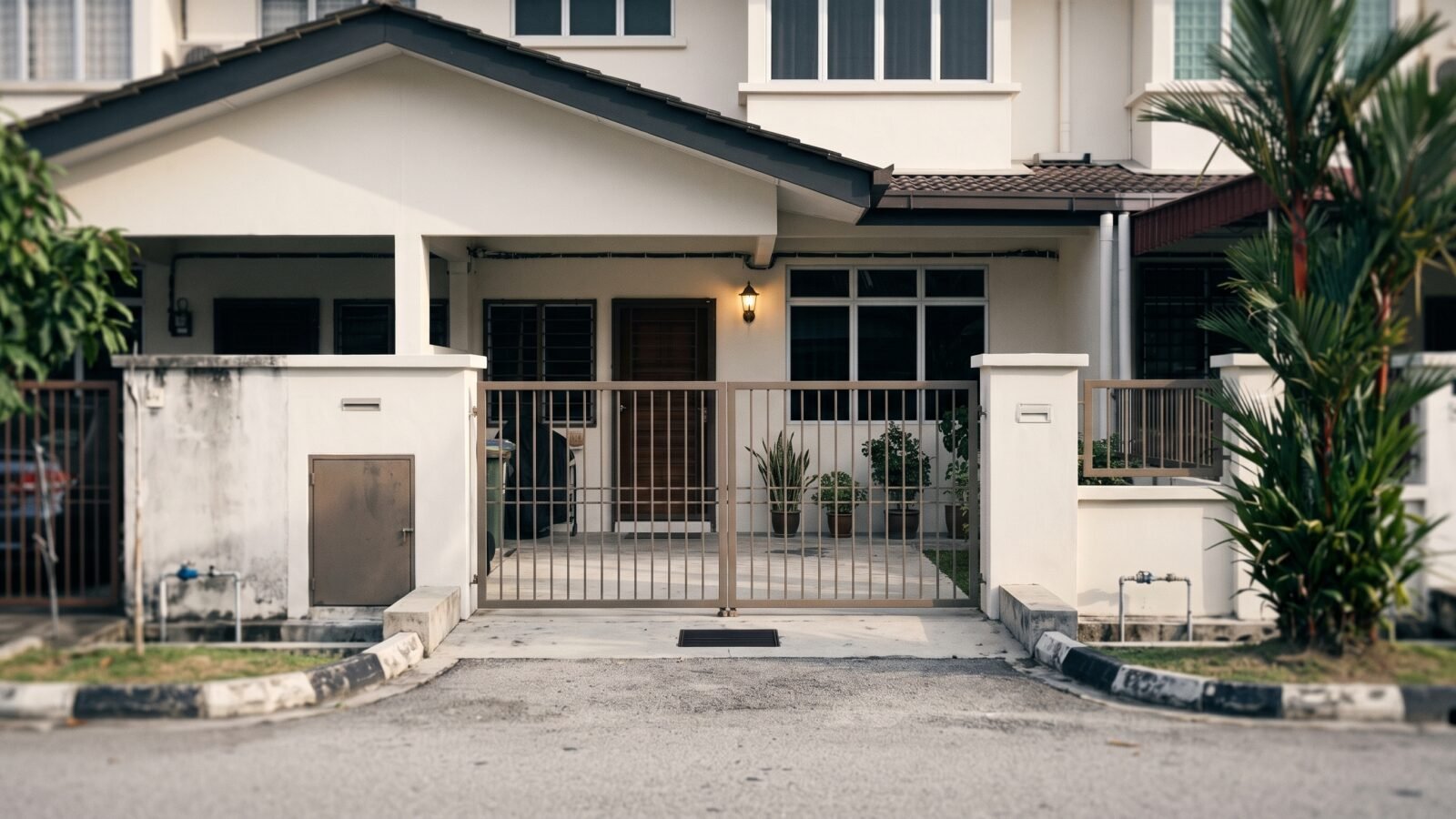
There is no will, and the thing everyone in the family is quietly worried about is the house. Who owns it now. Whether it has to be sold. Whether anyone can even touch it while all this gets sorted out.
The short version: there is a process, it has a name, and it works. Nobody loses the house by accident. This article walks through exactly what happens if you die without a will in Malaysia — starting with the house, in the order it actually happens.
Table of Contents
First — what happens if you die without a will in Malaysia
The house doesn’t get frozen, seized, or claimed by the government. Once someone is legally appointed to administer the estate, it passes to the beneficiaries according to the Distribution Act 1958 — the law that decides who inherits when there’s no will. Nobody is automatically forced to sell, and the family isn’t automatically forced out.
What does happen immediately is a pause. Until someone has the legal authority to act for the estate, nothing involving the house — or the bank accounts, or anything else the deceased owned — can be transferred, sold, or dealt with. That authority has to be granted first. That’s the part that takes the process seriously, not the part that should cause panic.
Why nothing can move until someone is legally appointed
When there’s a will, the will usually names an executor, and that person can start acting fairly quickly. When there’s no will, someone has to apply to be appointed — usually a spouse, adult child, or other close next-of-kin — through what’s called Letters of Administration.
This is why the bank freezes the deceased’s account: the bank has no way of knowing who’s authorised to act on the estate’s behalf until the court says so. The same logic applies to the house. The Land Office won’t register a transfer, and nothing can be sold, until an administrator has legal standing.
Getting there usually means a High Court (or Land Office, for smaller and simpler estates) application, and often sureties — guarantors who stand behind the administrator’s conduct, since the administrator is handling other people’s inheritance, not just their own. None of this is designed to slow the family down for its own sake. It exists because someone has to be accountable before assets move.
Do we have to sell the house?
No — not automatically, and not by default. Once Letters of Administration has been granted, the family generally has real choices about what happens to the house: it can be transferred into the beneficiaries’ names (jointly, if there’s more than one), one beneficiary can buy out the others’ shares, or it can be sold and the proceeds divided. The law doesn’t force a sale — the people who inherit it decide, and if they can’t agree, that’s when the court steps in to help resolve it.
The one genuine complication is an outstanding home loan. If the deceased had mortgage reducing term assurance (MRTA) or a similar insurance attached to the loan, the insurance may pay off the remaining balance, and the house passes on unencumbered. If there’s no such coverage, the loan doesn’t disappear — the estate (and eventually the beneficiaries, if they keep the house) remains responsible for it. This is worth checking early, since it changes what “keeping the house” actually costs.

Who inherits, if there’s no will?
Under the Distribution Act 1958, the shares depend on who survives the deceased:
- Spouse and children, no parents surviving — the estate is divided between the spouse and children, in proportions set by the Act.
- Spouse and parents, no children — divided between the spouse and parents.
- Spouse only, no children or parents — the spouse inherits the whole estate.
- Children only, no spouse — divided equally among the children.
- Parents only, no spouse or children — the estate goes to the parents.
This is a simplified summary, not a substitute for checking the exact family situation — the real shares depend on precise family composition, and it’s easy to get wrong without checking. If every beneficiary agrees, the family can also choose to divide the estate differently from these default shares, through a deed of family arrangement, once an administrator is in place.
A note on Faraid: this article, and this firm’s work, covers non-Muslim estates only. If the person who died was Muslim, the estate is distributed under Faraid principles through the Syariah Court instead, and that requires a peguam syarie — a different kind of practitioner. If that’s the situation, it’s worth saying so plainly now, so time isn’t lost on the wrong process.
What to actually do in the first two weeks
Before any of the legal process starts, there are practical things worth doing straight away:
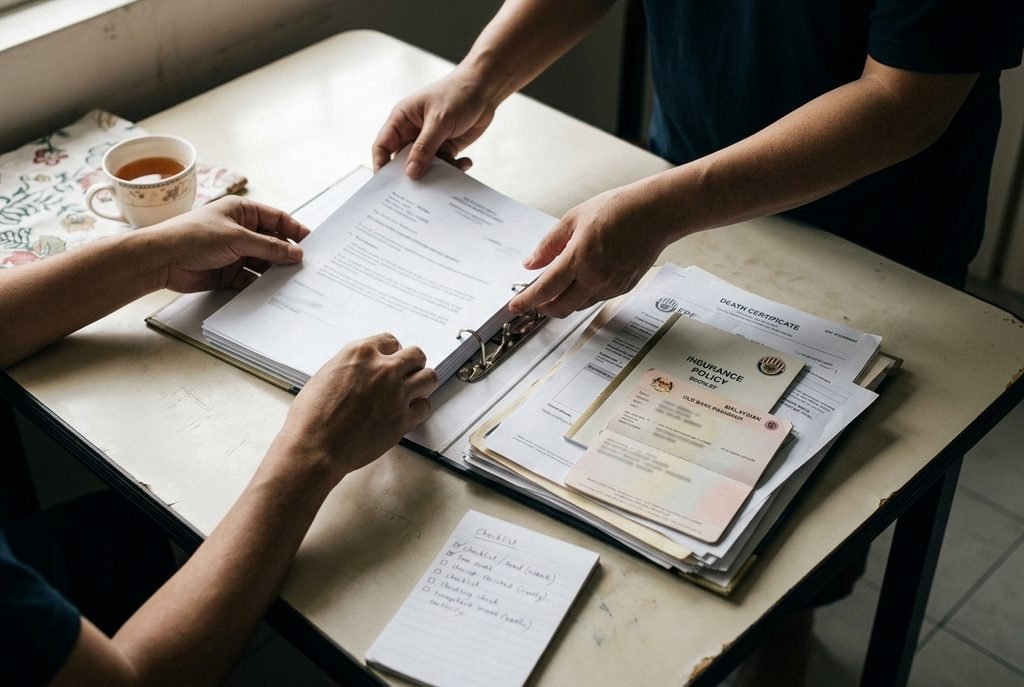
- Get the death certificate. Nearly everything else — the bank, the Land Office, a lawyer — will ask for it first.
- Search properly for a will, even if nobody remembers one being made. Check with any lawyer the deceased used, their bank (some hold wills in safekeeping), and Amanah Raya Berhad, which also stores wills.
- List what they owned — bank accounts, EPF, insurance policies, the house and any other property, vehicles, and any debts. This list is what a lawyer will need to start the Letters of Administration application.
- Don’t touch the deceased’s bank account. It’s usually frozen the moment the bank is notified of the death, and trying to withdraw or transfer funds beforehand can complicate matters later.
- Gather identification documents for the deceased and for whoever intends to apply to be the administrator.
None of this requires a lawyer yet. It just makes the actual application faster once one is involved.
How long does this take, and is it always slower than having a will?
Usually, yes — intestate estates tend to take longer than estates with a valid will, but not because of some fixed penalty for not having one. It’s slower because someone has to be appointed first (which a will normally handles in advance by naming an executor), sureties may need to be arranged, and if family members disagree about anything, that adds time too.
There’s no fixed timeline that applies to every estate, and it isn’t accurate to promise one — the real factors are how straightforward the family situation is, whether everyone agrees, and how complete the paperwork is from the start. A well-prepared application, with the documents from the checklist above ready in advance, is the single biggest thing that keeps this from dragging on.
Frequently asked questions
Does the surviving spouse automatically get everything?
No — under the Distribution Act 1958, a surviving spouse shares the estate with any children (and sometimes parents) rather than inheriting everything outright. How much each person gets depends on which combination of spouse, children, and parents survive the deceased. This is why identifying every family member first matters, before assuming anyone’s automatic share.
Can the family agree to divide things differently from what the law says?
Yes — if every beneficiary agrees in writing, the estate can be distributed differently from the Distribution Act 1958’s default shares, usually through a deed of family arrangement once an administrator has been appointed. If even one beneficiary disagrees, the statutory shares apply instead, which is why getting everyone’s agreement early avoids a longer dispute later.
What if my parent had a will but it can’t be found?
If a genuine will existed but the original can’t be located, the estate is generally treated as if there’s no will, unless a valid copy and a satisfactory explanation for the missing original can be shown to the court. It’s worth searching thoroughly — with the parent’s lawyer, bank, or Amanah Raya — before assuming no will exists at all.
Do I need a lawyer, or can I apply for Letters of Administration myself?
You can apply for Letters of Administration yourself, but the process involves a High Court or Land Office application, sureties, and supporting documents that are easy to get wrong without legal experience. Many families choose to have a lawyer handle the application itself, so avoidable mistakes don’t delay an already difficult process.

Where to start
Almost everything above follows from two questions: is there a will, and what did your parent own. Answer those two, and the right next step usually becomes clear on its own.
If it helps to talk through the specific situation, message me.
This article is general information about Malaysian law, not legal advice. Reading it or contacting me does not create a solicitor–client relationship.

Chrysandy Lai
Advocate & Solicitor
Chrysandy Lai is an Advocate & Solicitor admitted in both Malaysia and New Zealand, and principal of Messrs Chrysandy Lai & Qiu in Seremban. Her practice covers wills and estates, civil and commercial disputes, and arbitration.